

Business Talk with Takeshi Akiyoshi, President of MUJI Philippines Corp.
Why is MUJI Thriving in the Philippines Now?
Expanding Product Selection and Changing Marketing Strategies to Tap into New Demand
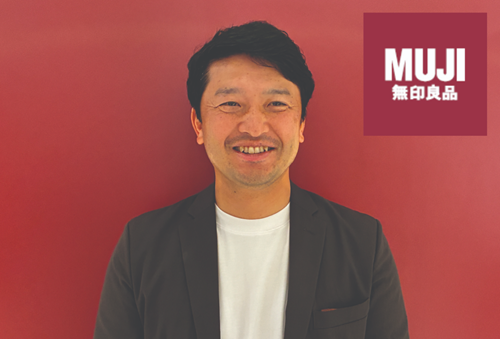
Mr. Takeshi Akiyoshi
President
MUJI Philippines Corp.
Since entering the Philippine market in 2010, MUJI has been expanding its product selection and strengthening its promotional efforts to communicate the value of its products, reaching a wider range of consumers. From introducing products suited to the country’s hot and humid climate and younger customer base to offering limited-time prices on popular items, MUJI continues to explore new opportunities for growth in the local market. We spoke with Mr. Takeshi Akiyoshi, President of MUJI Philippines Corp., about the company’s current operations and future strategies.
Philippine Primer
Could you tell us about the history of MUJI Philippines?
Mr. Akiyoshi
We started in 2010 through a licensing agreement with the local company Stores Specialists, Inc. (SSI). Initially, our role was to supply products, but in 2017, we established a joint venture and became directly involved in store operations.
As part of that journey, we opened our large-format store at Glorietta 3 in 2025 to help more people become familiar with the brand. Rather than simply displaying products, we want customers to experience the kind of lifestyle that MUJI offers.
Philippine Primer
How has the business performed so far, and what promotional strategies have you implemented?
Mr. Akiyoshi
One of the main challenges we identified over the past two years was that we had large stores, but not enough products to fill them. At the time, we carried around 2,000 to 2,500 product items. We began adding approximately 400 to 500 items every six months, bringing our current selection to around 3,500 to 4,000 items.
As customers gained more options, both the number of items purchased and the average spending per customer increased. Previously, we had difficulty making full use of our retail space. Now, we are thinking about how to use that space to introduce even more products.
However, simply putting products on the shelves does not guarantee sales. We learned this through our reusable dehumidifier. Initially, some of our local team members thought it might not sell in the Philippines. However, after trying the product ourselves, confirming its benefits, and sharing information about it, it has now become one of our best-selling products.
Listening to local opinions is important, but there are also things we cannot know until we actually try them. This experience encouraged us to think more carefully about how we communicate the value of our products.
In Japan, many people are already familiar with MUJI. Here, however, we operate with the understanding that many consumers still do not know the brand. We need to clearly explain what each product is and how it can be useful.
We use larger promotional displays than those in Japan to make product information easier to understand, while our staff explain the products directly to customers. We also value the connection between social media and our physical stores. We want people who discover our products online to visit our stores, see and touch the actual items, and experience their benefits firsthand.
We have also changed our pricing strategies. Every month, we hold a promotion called “Limited Offer,” where we offer popular products that already sell well at regular prices at special prices for a limited period.
The purpose is not to clear unsold inventory, but to give customers a reason to visit our stores again. If they purchase a product they like for a second time, it may also encourage them to continue using it in their daily lives.
We expanded this approach through our first members-only “MUJI WEEK,” held in April 2026. Since sales tend to be concentrated toward the end of the year, we wanted to create another sales peak between March and August.
As a result, relatively higher-priced products, such as sofas and satin pajamas, sold particularly well. We were surprised to see how much customers were willing to purchase during this period. This experience showed us that there is still room to improve how we prepare our products and determine the timing of our promotions.
Meanwhile, our “Mottainai Market,” which gives products with scratches or other imperfections a chance to find new owners, serves a different purpose by encouraging people to value and make good use of things.
What matters is understanding why we offer discounts in the first place. Through our promotions, we want to communicate both the value of our products and the importance of using them without waste.
Philippine Primer
How do you view the characteristics and current situation of the Philippine market, as well as its future potential?
Mr. Akiyoshi
First, we had to change our own way of thinking based on our experience in Japan.
Take short-sleeved T-shirts, for example. In Japan, store selections change when autumn and winter arrive, but here, short-sleeved T-shirts are needed throughout the year. Just because the season changes does not mean customers’ needs change as well. We began reflecting this simple reality in our product selection.
Clothing made with breathable fabrics and cooling materials has also been performing well. I believe this reflects the demand for products that make everyday life more comfortable in the heat.
On the other hand, we cannot simply assume that winter clothing is unnecessary because the Philippines is a hot country. There is demand for lightweight down jackets and warm innerwear among people who travel overseas or work abroad.
Rather than making decisions based solely on the climate, we need to consider where and how people living here will use our products. By doing so, we can identify needs that we have not yet addressed.
We are also seeing our customer base expand. Initially, our stores were mainly located in malls catering to higher-income consumers. Today, we are expanding into malls such as SM, which attract a wider range of customers.
I believe this reflects a growing number of consumers who appreciate not only affordability but also quality and ease of use. Accessible products such as stationery have become an entry point for younger customers to discover MUJI.
Someone who starts using our pens as a teenager may later choose our skincare products and eventually purchase clothing or furniture.
With the Philippines having a large young population, there is an opportunity to build long-term relationships with customers as their lifestyles change.
What matters is not necessarily encouraging customers to purchase expensive products from the beginning. Instead, we want them to try one product first and discover its benefits. From there, we can gradually build a relationship with them. I believe the Philippine market offers that kind of potential.
We also see opportunities beyond Metro Manila. Our pop-up store in Clark received a positive response, showing us that there is demand outside the capital region.
Even a small store can provide an opportunity for people to discover MUJI and help us determine our next steps.
As we continue expanding in Cebu, we also want to explore areas such as Central Luzon to better understand what kinds of demand exist in different locations.
Philippine Primer
What are your plans moving forward?
Mr. Akiyoshi
First, we want to further expand our product selection. Beyond that, we would also like to explore the possibility of developing products in the Philippines.
The year 2027 will mark the 10th anniversary of the establishment of our joint venture. We hope to use this milestone as an opportunity to connect with more customers.
However, even if suitable locations are available, we cannot expand without developing people who can manage our stores.
We are currently strengthening our training programs for store managers and establishing a system for regular store visits and guidance.
We also want to increase salaries based on employees’ abilities and performance, and build a company where our team members can enjoy better lives. This goal is closely connected to the growth of our business.
Our products should naturally become part of people’s everyday lives and serve a useful purpose. Opening stores creates jobs and helps support employees and their families.
We want local customers to purchase our products and for MUJI to become as natural a part of their daily lives as water or air.
This is what my guiding principle, “Contributing to Society Through Business,” means to me.
There is still so much we can do. I want us to continue turning these ideas into reality, one step at a time, here in the Philippines.
About Mr. Takeshi Akiyoshi
Born in Fukuoka Prefecture, Japan, Mr. Takeshi Akiyoshi joined Ryohin Keikaku in 2003. After serving as a store manager, he joined the Overseas Business Division in 2014, where he was responsible for mainland China and was stationed at the company’s Chinese subsidiary in Shanghai for approximately four years.
Upon returning to Japan, he held several positions, including Area Manager for Kyushu, overseeing operations in Western Japan, Store Manager of the Seibu Ikebukuro Store, and Head of the Chiba Business Division.
In August 2024, he was appointed Vice President of MUJI Philippines Corp. before assuming the role of President in April 2025.
Hobbies
Soccer, swimming, and cooking. Mr. Akiyoshi has a strong interest in clothing, household goods, and food. His desire to turn these personal interests into a career was one of the reasons he joined Ryohin Keikaku.
Personal Motto
“Contributing to Society through Business.”
Mr. Akiyoshi believes in creating products that naturally become part of everyday life, much like water or air, while reducing waste and enriching people’s lives.
He also considers creating employment opportunities through store expansion and supporting the livelihoods of employees and their families as important ways for a business to contribute to society.