

Business Talk with Takayuki Imai, President and Representative Director, Link and Motivation Philippines, Inc.
Creating Opportunities for Transformation for Organizations and Individuals Through Motivation Engineering
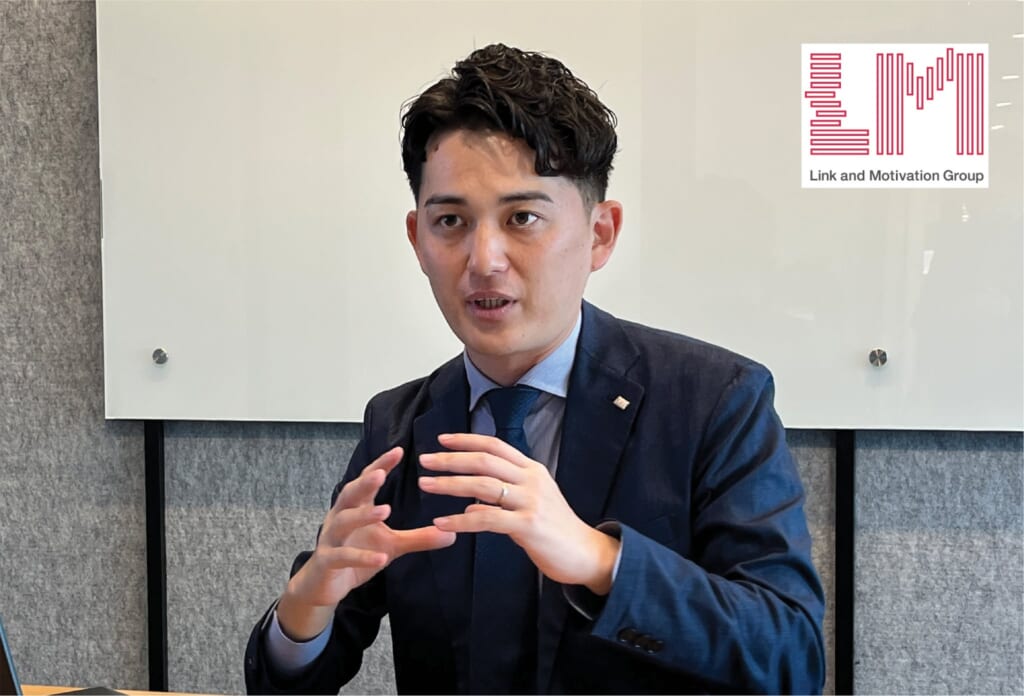
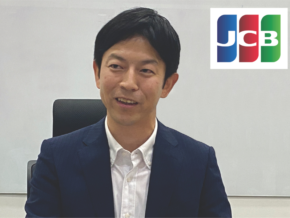
Mr. Takayuki Imai
President and Representative Director
Link and Motivation Philippines Inc.
Since its founding in 2000, Link and Motivation has been delivering organizational and human resources consulting services with a strong focus on one thing: ‘Through Motivation Engineering, we provide opportunities to transform organizations and individuals and create a more meaningful society’. The company took a major step forward in January 2025 by establishing overseas offices in four Southeast Asian countries, including the Philippines.
Regardless of company size, many Japanese firms in the Philippines face common organizational challenges. What does it take to build a company that continues to be chosen by employees in a competitive local market?
To explore this, we spoke with Mr. Takayuki Imai, who leads Link and Motivation’s operations in the Philippines, about the realities on the ground and the kind of organization companies need to become to thrive here.
Philippine Primer:
Could you tell us about your company’s business and its strengths?
Mr. Imai:
Link and Motivation is a consulting firm that provides one-stop support in key organizational and HR areas, including recruitment, training, systems, and corporate culture. At the core of our services is our proprietary organizational diagnostic tool based on employee engagement. This allows us to visualize an organization’s current state, strengthen its existing advantages, and work closely with companies to overcome their challenges.
For the past 25 years since our founding, we have specialized in motivation and engagement. In Japan, we have maintained the No. 1 position in our field for nine consecutive years, and overseas, we have achieved growth far beyond our initial plans. These results reflect the strong track record we have built over the years.
Our greatest strength lies in our corporate philosophy of “Motivation Engineering.” This is a unique diagnostic and transformation technology that integrates insights from psychology, behavioral economics, management science, and linguistics. Through this approach, we are able to identify priority issues even in organizations facing complex challenges and support them through meaningful change.
We do not stop at analysis—we focus on real transformation. That capability is what allows us to continue leading in the organizational and HR consulting field.
Philippine Primer:
What led to your expansion into the Philippines, and what is its significance?
Mr. Imai:
Link and Motivation officially began its overseas expansion in January 2025, establishing companies simultaneously in four locations: the Philippines, Singapore, Thailand, and Vietnam (Ho Chi Minh City). This year, we further expanded into Indonesia and Hanoi, Vietnam.
Our entry into the Philippines was driven by strong requests from Japanese companies operating here, who asked us to help them build organizations that can compete globally. While supporting Philippine subsidiaries from Japan, we noticed gaps in understanding between headquarters and local teams, as well as a growing concern that Japanese companies were gradually losing their presence in the global market.
As a company that specializes in building organizations that are continuously chosen by employees and by society, we believe we could make a meaningful contribution by addressing these challenges directly.
Philippine Primer:
What are the main challenges Japanese companies face in the Philippines?
Mr. Imai:
Having been in the Philippines for a year now, what stands out most is how much management challenges differ by industry. In fast-growing sectors such as food, daily goods, IT, BPO, and construction, organizational and talent development often can’t keep up with business growth. Meanwhile, in more mature industries, organizations struggle to adapt to changes in the business environment.
That said, most of the concerns we hear from Japanese companies can be grouped into three main challenges.
The first is a gap in perception between management and frontline employees. Management often expects employees to take initiative and wants to delegate authority, while employees may expect detailed guidance and clear instructions. This mismatch frequently leads to declining motivation.
The second challenge is how to handle employees’ assertions of rights. In the Philippines, where worker protection is strong, a loss of trust in the company can quickly lead to various forms of rights-based claims. This makes it essential to understand employee expectations, adjust them appropriately, and continuously nurture engagement.
The third is talent retention and organizational vitality. Job hopping is common among employees in their 20s and 30s, while long-term employees are harder to reassign or demote, making organizational renewal difficult. As a result, performance can stagnate. Many companies struggle not only with preventing turnover, but also with how to raise the performance of the people they already have.
We believe these issues are not just about cultural differences. They are fundamental organizational challenges. That’s why we emphasize the importance of clearly defining roles: management builds trust, managers connect leadership and frontline teams, and employees carry out their work with independence. When these roles are misaligned, engagement inevitably declines.
Building strong organizations requires people to understand their own roles while also respecting and collaborating with others. In the Philippines, where values are diverse, creating this shared understanding is challenging—but also deeply rewarding.
Philippine Primer:
What personal impressions have you had of the Philippines since arriving?
Mr. Imai:
I have a very positive impression of the Philippines, especially of the people. They are gentle, cheerful, and full of positive energy. It’s not unusual to hear someone singing in the office—sometimes even during training sessions! That brightness inspires me every day.
Since I also value positive thinking, I feel energized by the warmth and optimism of the Filipino people. From a business perspective, the country’s steady GDP growth, supported by population increase and strong consumer demand, shows tremendous potential. I believe there is a strong connection between the Filipino mindset and the theme of motivation that we work with, and I’m confident that our services can contribute to the country’s continued growth.
Philippine Primer:
What is your approach to organizational transformation, and what is your mission in the Philippines?
Mr. Imai:
Our philosophy is ‘Through Motivation Engineering, we provide opportunities to transform organizations and individuals and create a more meaningful society’. We believe people and organizations have enormous potential, but we also recognize that real change is not easy.
While we exist to raise motivation, we are also honest about the reality that people naturally prefer the status quo and tend to resist change. We share this openly with our clients. For those who genuinely want to change their organization or develop their people, we provide practical, technology-based methods for making change possible, and we walk alongside them every step of the way.
Engagement and workplace relationships are the foundation of happiness and fulfillment. When relationships at work break down, it affects every part of life. But when people look forward to Mondays and enjoy working with their colleagues, they can work with more positivity and purpose. Our goal is to help create more workplaces like that.
By maximizing the incredible potential of Filipino organizations and people, we hope to contribute to the country’s further development, and we will continue delivering our expertise with that mission in mind.
About Mr. Takayuki Imai
Born in 1993, Mr. Imai graduated from Waseda University and joined Link and Motivation in 2018. After working on consulting projects for major corporations, he moved to a division supporting mid-sized and venture companies. During this time, he also helped establish a regional revitalization support program for local governments. In January 2025, he became the company’s youngest-ever overseas subsidiary president and assumed his current role.
Professional Philosophy:
“Until it’s done.” Once he decides something is worth achieving, he sees it through to the end.
Hobbies:
He enjoys sports and has played baseball since elementary school. Running and walking remain part of his routine, and he is currently training in golf. He also loves discovering good restaurants. His Google Maps is full of places he wants to try.