Philippine Primer
How has your company expanded over the past 30 years in the Philippines?
Mr. Tamura
JCB was established in 1961 and began expanding overseas in 1981. At the time, as overseas travel among Japanese consumers increased, ensuring card usability abroad became an industry priority. While many Japanese card companies partnered with global brands, JCB chose to develop its international business independently. We opened our first overseas subsidiary in Hong Kong in 1981, marking the start of our global expansion.
Our Philippine operations began in 1996 through a partnership with RCBC, launching the first JCB card membership business in the Philippines. We started with just a few staff and a shared office space. We later partnered with BDO in 1997 and EastWest in 2022.
Unlike in Japan where we issue cards and manage merchants directly, our overseas model focuses on licensing. We grant local banks and partners the rights to issue JCB-branded cards and manage merchant acquisition. In the Philippines, we now work with three issuing partners and nine merchant-acquiring partners, expanding the business through strong collaboration with local institutions.
Philippine Primer
How do you assess the current Philippine market?
Mr. Tamura
The Philippine market is now at the early stage of widespread credit card adoption. With a GDP per capita of around USD 4,000, the country is comparable to Japan in the early to mid-1970s, when credit cards began to expand rapidly. The Philippines has a young population and strong consumer spending, making it a highly promising growth market.
The numbers reflect this momentum. Compared to the first quarter of 2021, JCB card membership has tripled, while transaction volume has grown sixfold. The rise of e-commerce after the pandemic has also supported growth.
Among the four Southeast Asian markets we prioritize—Philippines, Thailand, Indonesia, and Vietnam—the Philippines shows particularly strong growth. With less than 10% of the population currently holding credit cards, the market still has significant expansion potential.
Philippine Primer
What differentiates JCB from competitors?
Mr. Tamura
We leverage our strengths as a Japanese global brand in both B2B and B2C aspects.
For our partners, we conduct training sessions for front-line staff such as call centers and bank branches to help them better understand JCB. We also provide workplace visits, incentives, and promotional tools to support card acquisition. Even as a licensing business, we maintain a hands-on support approach, working closely with partners to grow their business.
For cardmembers, we utilize the rising popularity of Japanese culture through promotions highlighting the “Japan brand.” One example is JCB Best Bites, offering discounts and perks at Japanese restaurants across Manila, Cebu, and Davao.
We also run JCB Chooseday, a weekly promotion where cardmembers can enjoy benefits at participating merchants every Tuesday. This campaign has continued for three years, with some merchants reporting sales increases of 20 to 30 times on promotion days.
Philippine Primer
What is your current organizational structure and approach to staff development?
Mr. Tamura
Our Manila branch has 19 employees: 3 Japanese and 16 Filipino staff. The organization is divided into four main departments—issuing license sales, merchant license sales, marketing, and administration (HR and general affairs).
In recruitment and operations, we value teamwork and a customer-focused mindset. Cross-department collaboration is essential to our work. A good example is our recent face-to-face events held in Manila, Cebu, and Davao. At a Japan-themed JCB event in Glorietta, Makati, we welcomed more than 10,000 visitors over two days. Large-scale initiatives like this require the entire office to work together, making teamwork a core value we seek in our staff.
Philippine Primer
What are your future business plans?
Mr. Tamura
As we mark our 30th anniversary in the Philippines, we are entering the “second chapter” of our Philippine business. JCB’s core DNA is “challenge.” Since deciding to expand overseas independently in 1981, we have always embraced new challenges. To compete with major global players, we must continue trying new and different approaches, learning from failures and improving.
Our immediate goal is to steadily increase our card issuing partners. In the mid- to long-term, my mission is to grow the Philippine market into one of the key pillars supporting JCB’s global operations. I believe the Philippines has the potential to achieve this.



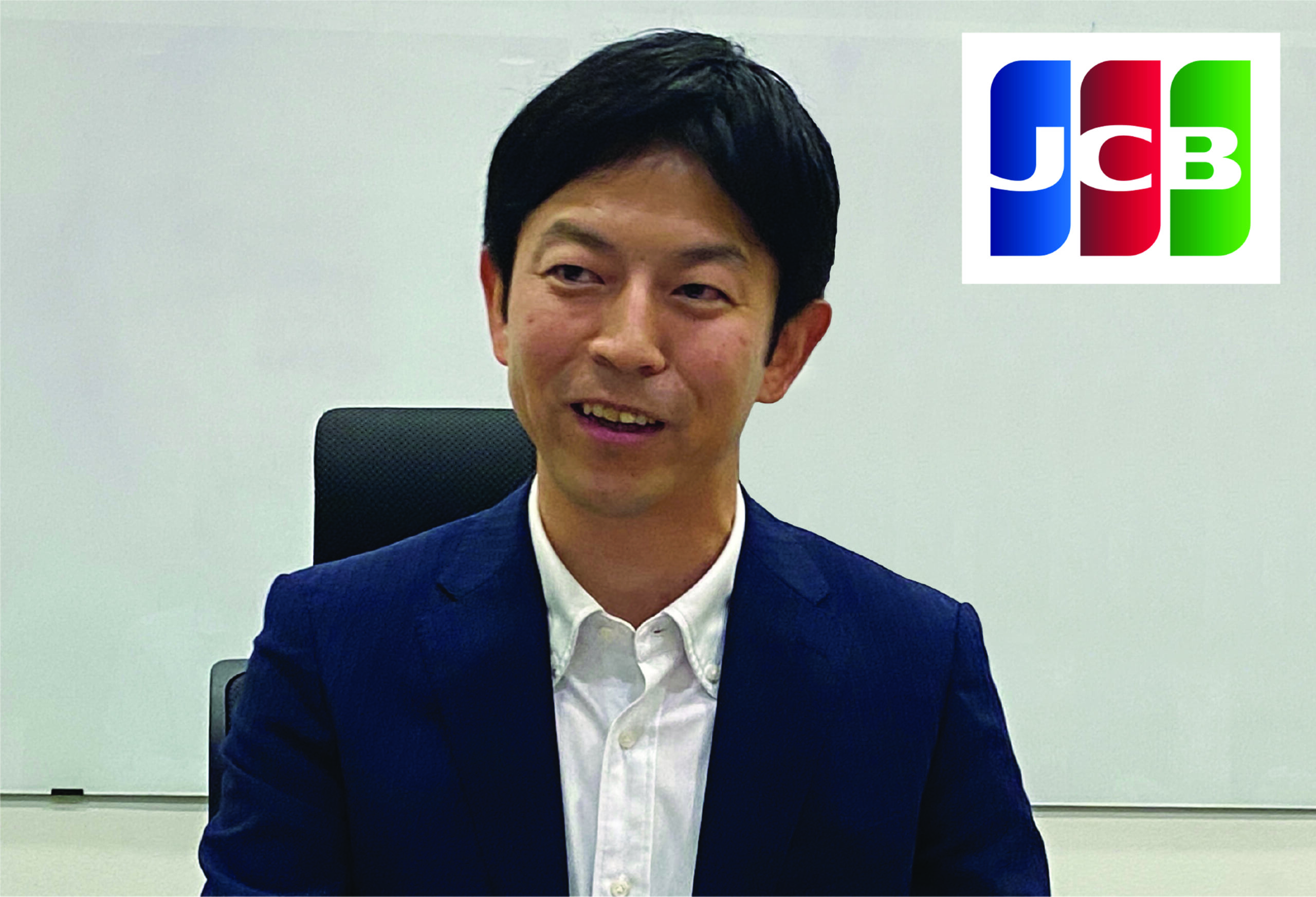 Mr. Wataru Tamura